
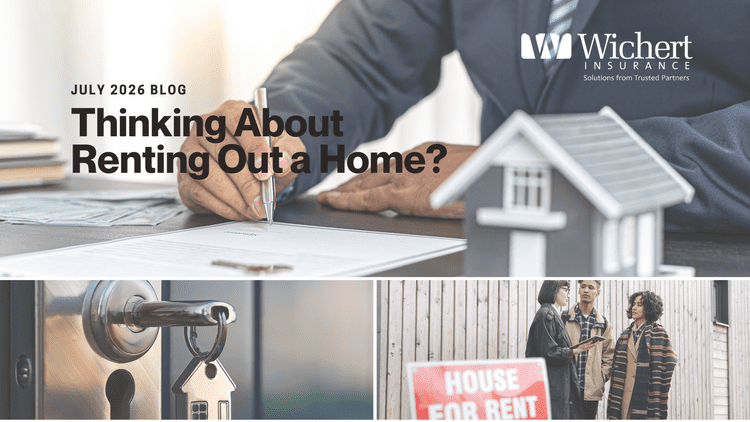
Not every landlord sets out to become one.
Sometimes, a home does not sell as quickly as expected. Sometimes, the offers are not where you hoped they would be. Sometimes, keeping the property and renting it out feels like the most practical option, at least for now.
That can be a smart financial decision. But before you hand over the keys to a tenant, there is one important question to answer:
Does your insurance still match the way the home is being used?
A home you live in and a home you rent to someone else are not treated the same from an insurance standpoint. Even if the property has not changed, the risk has. That shift can create coverage concerns if your policy is not updated.
When the Home’s Use Changes, Coverage May Need to Change Too
A standard homeowners policy is only available for a home you occupy or occasionally offer out as a short-term rental. Not all homeowners policies allow even a short-term rental. Once the property occupancy changes, your policy needs to change to fit the circumstances.
That is because you are no longer the person living in the home day to day. You may not see small maintenance issues right away. You may not know when something has broken, leaked, or become unsafe. You also now have tenants, guests, delivery drivers, and others coming onto the property in a different way.
These details matter.
If a claim happens and the home is being used as a rental, your insurance company will want to know that the policy accurately reflects that use. If it does not, you could run into problems at the exact time you need coverage most.
Before renting out the home, talk with your insurance advisor and explain the situation clearly. Let them know whether the home will be rented full-time, temporarily, seasonally, or as a short-term rental.
Questions to Ask Before a Tenant Moves In
If you are considering renting out a home, here are a few questions worth asking before the lease is signed.
Is my current homeowners policy still appropriate?
Do not assume your current policy will automatically cover a rental situation. In many cases, a rental property needs a different type of policy than an owner-occupied home.
Your advisor can help determine whether your current coverage should be changed, rewritten, or replaced with a policy designed for rental property.
What happens if the home is vacant for a period of time?
There may be a gap between moving out, listing the home, finding a tenant, and having someone move in. During that time, the home may be considered vacant or unoccupied.
Vacancy can affect coverage. Some policies limit certain types of protection after a property has been vacant for a specific period of time.
This is especially important if the home is sitting empty while you decide whether to sell or rent. Let your insurance advisor know as soon as the occupancy status changes.
Am I protected if someone gets hurt on the property?
As the property owner, you may be responsible for certain injuries that happen on the premises. A loose handrail, icy walkway, uneven step, or other hazard could lead to a liability claim.
Rental property owners should review their liability limits and make sure they are comfortable with the level of protection they have in place. Depending on your situation, it may also make sense to discuss an umbrella policy for an added layer of liability protection.
What if damage makes the home temporarily unlivable?
If a covered loss damages the property, repairs may take time. During that period, you may not be able to collect rent.
Loss of rental income coverage may help protect the income you were expecting from the property if it becomes uninhabitable because of a covered claim. For many new landlords, this is an easy coverage area to overlook.
Should I require renters insurance?
Your policy generally protects the building, not the tenant’s personal belongings.
That means if a tenant’s furniture, electronics, clothing, or other personal property is damaged, your insurance may not cover those items. Renters insurance can help protect the tenant’s belongings and may also provide liability coverage for the tenant.
Many landlords make renters insurance a lease requirement so expectations are clear from the start.
Long-Term Rental or Short-Term Rental? It Matters.
How you plan to rent the home can also affect your insurance needs.
A traditional long-term tenant is different from using the home as a short-term rental through platforms like Airbnb or Vrbo. Short-term rentals often involve more frequent turnover, more guests, and less predictability.
Some policies exclude or limit coverage for short-term rental activity. Others may require specific endorsements or a separate policy.
Before listing the property, make sure your insurance advisor knows exactly how the home will be rented. The details matter.
Before You Hand Over the Keys
Renting out a home comes with more responsibility than simply collecting rent. A little preparation can help reduce risk and avoid confusion later.
Before a tenant moves in, contact your insurance advisor, explain the change in use, and review whether your current policy still fits. Ask about rental property coverage, liability limits, umbrella coverage, loss of rental income protection, and how vacancy could affect your policy.
It is also a good idea to require tenants to carry renters insurance, document the condition of the home before move-in, and stay on top of maintenance and safety repairs.
Talk Through the Change Before There Is a Claim
Renting out a home can be a practical solution, especially when selling is not the right move. But it is not something to do without reviewing your insurance first.
The most important thing is to be proactive. Once the home’s use changes, your coverage may need to change with it.
If you are thinking about renting out a home you planned to sell, Wichert Insurance can help you review your options, identify potential gaps, and make sure your coverage fits the next chapter for your property.